
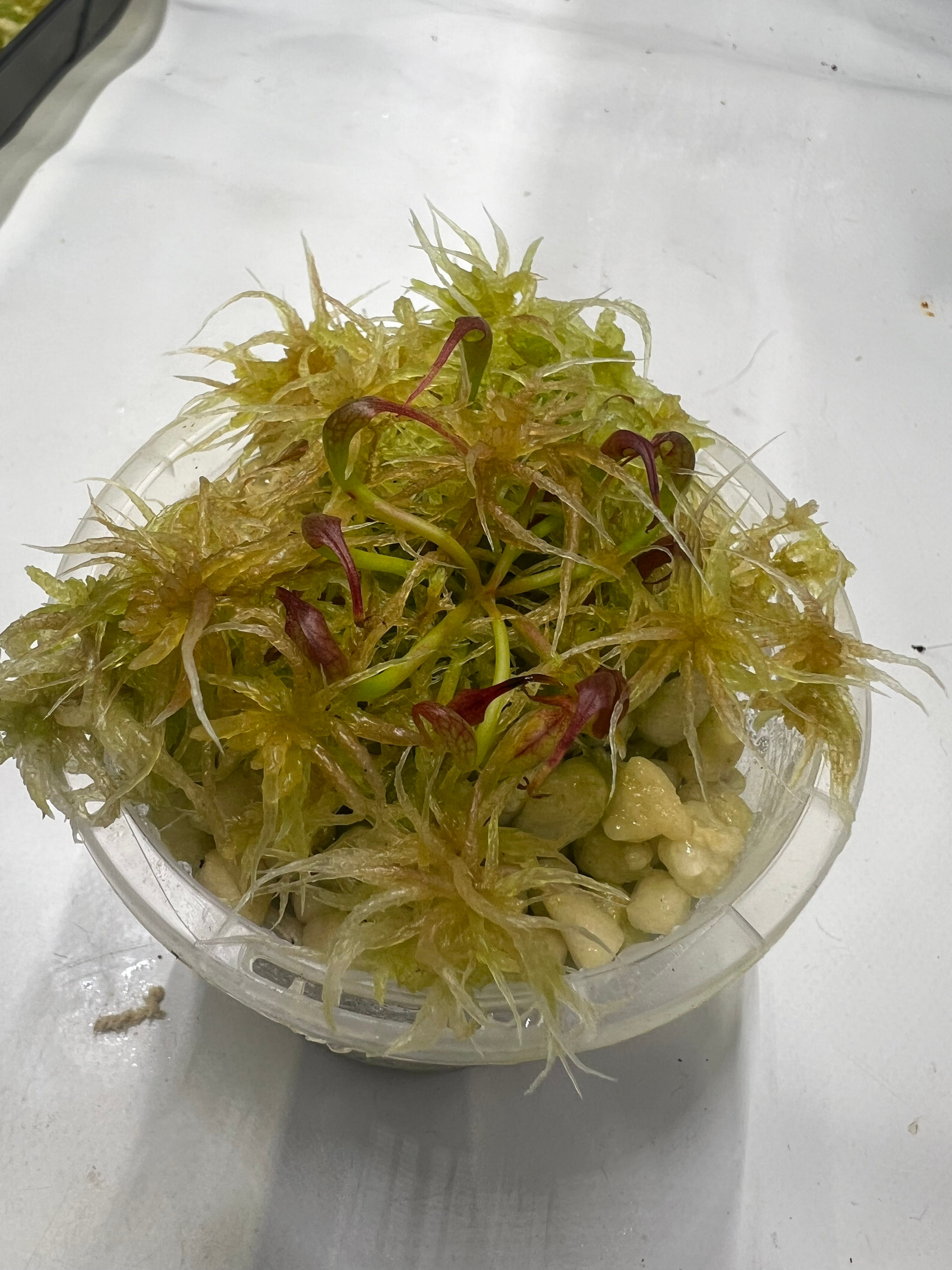

Darlingtonia californica, the Cobra Lily or California pitcher plant, is one of the most distinctive carnivorous plants in the world and the only species in its genus. It was found in 1841 by botanist William D. Brackenridge near Mount Shasta in Northern California during the Wilkes Expedition. John Torrey described it in 1853 and named the genus after the Philadelphia botanist William Darlington. Its common name comes from its pitchers, which look like a cobra rearing up to strike.
Habitat Overview: Climate and Soil
Darlingtonia grows from sea level to near-alpine elevations in cool, wet, Mediterranean-type climates. It is restricted to places with water flowing all year round, such as bogs, fens and seeps, and even roadside drainage ditches. It most often grows on nutrient-poor serpentine rock and also on silica sand deposits. The cold running water around its roots is the key to its success.
Natural Range and Distribution
The Cobra Lily is native to Northern California and southwestern Oregon, reaching as far north as Tillamook County on the Oregon coast. It is listed as Least Concern by the IUCN, although it is uncommon in the field because of its very specific habitat needs.
Physical Characteristics
The plant forms tubular pitcher leaves topped by a curled hood. A forked, fang-like appendage, often called the “fishtail”, hangs below the hood and ranges from yellow to purplish green. The hood hides a small entrance hole and is covered in translucent patches that act as false exits, confusing insects once they are inside. Unlike other American pitcher plants, it does not collect rainwater: it draws water up from its roots into the pitcher to control the fluid level. Prey is held by slippery walls and downward-pointing hairs. Mature plants send up a single nodding flower on a stalk slightly taller than the pitchers, with green sepals longer than its red-veined petals.
Growing Notes
Darlingtonia has a large, rambling root system and spreads by stolons, which is why our plants are sold as divisions. Keep the roots cool and use cold, pure water; on hot days many growers add ice or grow the pots in insulated boxes of sphagnum moss. Plants need a cold winter dormancy of 3 to 5 months.
Similar Species and Differentiation
Darlingtonia belongs to the Sarraceniaceae, the New World pitcher plant family, alongside Sarracenia and Heliamphora. Its twisted, hooded pitchers, fishtail appendage and habit of filling its own pitchers from the roots set it apart from both.